


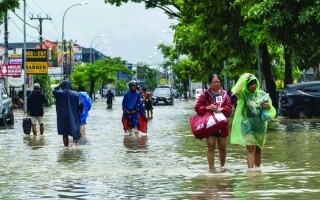
The Indonesian island of Bali has experienced catastrophic floods, the worst in a decade. According to the meteorological agency, the natural disaster claimed the lives of at least 18 people, with four still missing. A resident of the island, Ruth Didley, said the flood washed away her home, as well as her brother's, father's, and mother's homes, while all the contents of the house were swept away. Ayu Wian Dipawa, who lives nearby, said his dog woke him up during the downpour, and he found the water level around his house rising rapidly «within minutes». Governor of Bali, Ayu Wian Koster, admitted that «Bali has never seen such heavy rains before» and that infrastructure problems played a role in these catastrophic floods. He also announced a review of construction along four main rivers, as well as a strict campaign against construction that violates zoning regulations. Koster promised to hold violators accountable and stated plans to introduce regulations to protect Bali's rice paddies from further development.
Professor of Udayana University, I Gede Hendrawan, who conducted research on waste issues, reported that 2019 research showed that Bali produces 4,200 tons of waste daily, with less than half of it going to landfills. He noted that improperly disposed waste causes blockages in drainage and sewer systems. The Bali government will close a major landfill on the island this year and urged households to manage their organic waste, but Hendrawan said that «many people have no alternative», adding: «We all suffer from the waste problem due to the lack of a good management system». Koster stated that the local government wants to build a waste-to-energy plant, but this is unlikely to happen soon.
The floods were partly the result of unprecedented rainfall, but also a reflection of years of excessive urban development and a waste management system under immense pressure. The southern part of the island, formerly green, has transformed due to a tourism boom that brought jobs and economic benefits, but also led to the construction of buildings on rice fields and coconut groves that provided a natural balance. The founder of The Three Map, David Gavu, compared declassified American surveillance images of the island from the Cold War era with modern satellite images and noted: «All this land has now turned into roads or buildings, and the soil can no longer absorb water to the same extent».
The growing tourism industry exacerbates the problem. Over 4.6 million foreign tourists visited Bali between January and August this year, exceeding the island's population of 4.4 million. A planned second airport is likely to attract even more tourists, increasing the amount of waste. Despite government efforts to demolish illegal buildings, the situation remains dire. Ruth Didley, whose home was destroyed in the flood, is still in shock: «I'm still in a state of shock. It was so terrifying that we couldn't speak».